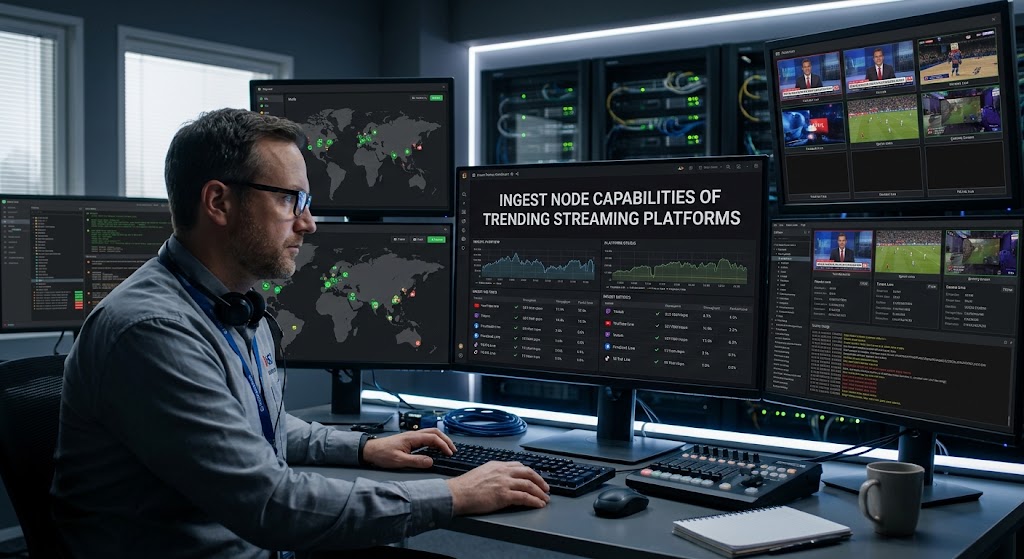
A healthy streaming service can look effortless on the front end while a small failure in the backend quietly brings everything down. Behind trending streaming platforms sits a chain of ingest servers, encoders, regional endpoints, and delivery networks that must keep accepting video without choking under sudden demand. AWS, for example, treats ingest as a critical layer where network throughput, jitter, link loss, authentication, source quality, and redundancy all matter.
That makes an ingest-node audit much more useful than simply asking which platform has the prettiest player.

7
1. Ingest Nodes Decide Whether Live Video Gets Through
Regional Ingest Nodes Matter More Than Most Viewers Realize
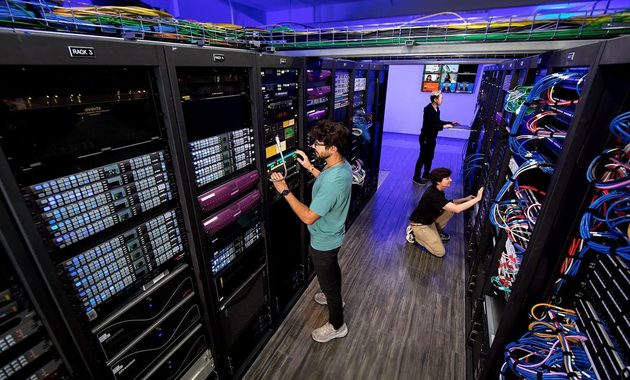
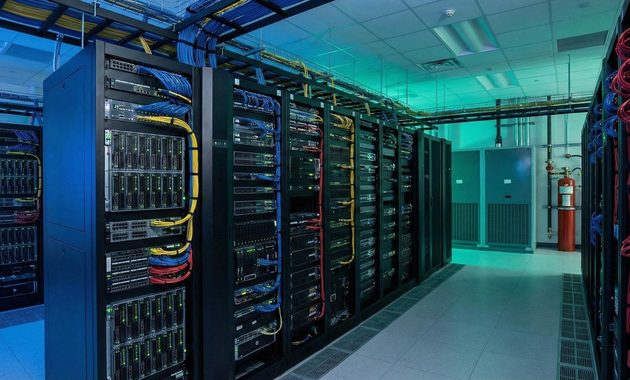
Ingest nodes are the first serious checkpoint after a camera, encoder, or production system sends its live feed toward the cloud.
If that entry point is geographically distant, unstable, or overloaded, the problem can appear before the CDN even gets involved.
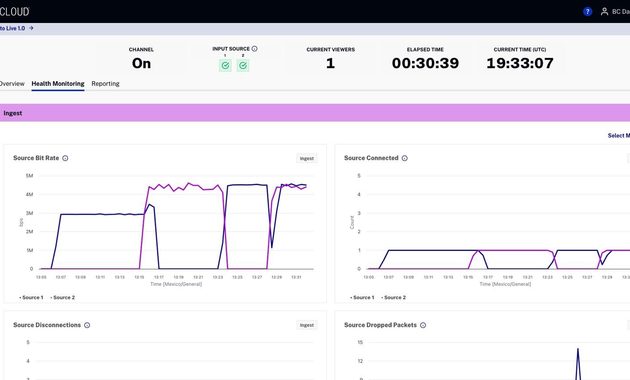
A better architecture places ingest close to the production source and provides redundancy. AWS’s reference architecture, for instance, uses two input feeds for MediaLive redundancy rather than trusting a single feed.
For platform operators, I’d look for:
- Multiple regional ingest locations
- Primary and backup input paths
- Automatic failover
- Authentication at ingest
- Monitoring for packet loss and jitter
- Capacity that can handle event spikes
The key lesson is simple: ingest nodes aren’t just doors into the platform. They’re shock absorbers.
Why a Single Ingest Endpoint Is a Bad Bet
Imagine a concert broadcaster in Singapore sending video to an ingest location thousands of kilometers away. The stream may technically connect, but latency, congestion, or routing problems can turn a clean production feed into a fragile one.
Regional entry points reduce that exposure.
AV1 Codec Support Is Becoming a Competitive Advantage
Codec choice also changes the economics. AWS MediaLive now lists AVC, HEVC, and AV1 among its supported output options.
AV1 can reduce bandwidth requirements for comparable visual quality, but encoding is computationally heavier. That means support alone isn’t enough. A platform needs enough encoding capacity and compatible playback clients to make AV1 worthwhile.
For a growing service, the practical question is not “Does it support AV1?”
It’s:
Can it use AV1 without making encoding capacity, compatibility, or operational complexity worse?
2. Cloud Egress Costs Can Quietly Destroy Streaming Margins
Cloud Egress Costs Grow With Every Successful Viewer
The funny thing about streaming economics is that success can become expensive.
Cloud egress costs represent one of the biggest variables because every viewer consumes data. AWS’s own example for a one-hour live event with 1,000 viewers estimates about $67.24 for CloudFront distribution alone under its stated assumptions. For 10,000 viewers, its example reaches $1,531.49 per hour.
Those aren’t universal prices, but they’re a useful warning.
A platform needs to model:
- Average viewer bitrate
- Number of concurrent viewers
- Average session duration
- CDN cache efficiency
- Regional data-transfer charges
- Cross-region and cross-AZ traffic
- Encoding and packaging costs
AWS specifically recommends paying attention to inter-region and inter-AZ transfer because unnecessary movement of media through the cloud can increase costs.
Why Cheap Hosting Can Become Expensive Streaming
A basic server might look affordable on paper. But live video isn’t normal web traffic.
A platform moving several gigabits per second needs infrastructure designed around sustained throughput, redundancy, and delivery economics. A cheap VM becomes less attractive once bandwidth, transcoding, storage, monitoring, and CDN bills enter the picture.
AV1 Can Help, But It Isn’t Free
AV1’s bandwidth efficiency can make a meaningful difference at scale. AWS has published cost modeling showing how codec efficiency can affect CDN distribution expenses, although the exact savings depend heavily on bitrate ladders, viewer compatibility, and encoding costs.
So don’t treat AV1 as a magic cost-cutting button.
It works best when the entire pipeline is designed around it.
3. AV1 Codec Support Needs to Fit the Entire Backend Infrastructure
Backend Infrastructure Should Be Audited as One Pipeline
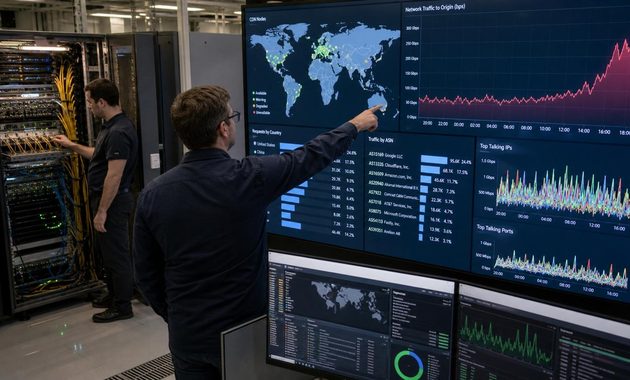
The real test for backend infrastructure isn’t whether individual components look impressive. It’s whether ingest, encoding, packaging, CDN delivery, monitoring, and failover behave as one system.
A typical cloud workflow can look like:
Camera → Ingest → Transcoding → ABR Packaging → Origin → CDN → Player
AWS’s reference implementation follows a similar model using MediaLive for transcoding, MediaPackage for packaging, and CloudFront for distribution.
That architecture also explains why a platform can’t judge its backend by server specifications alone.
A powerful encoder won’t save a weak ingest layer. A great CDN won’t fix bad packaging. And fast servers won’t compensate for poor regional redundancy.
What I Would Audit Before Choosing a Platform
For operators evaluating newer services, I’d score these areas first:
- Ingest resilience: Is there a backup path?
- Regional coverage: Can broadcasters connect nearby?
- Codec flexibility: AVC, HEVC, and AV1?
- ABR workflow: Can the platform produce multiple quality levels?
- CDN strategy: Is traffic efficiently cached?
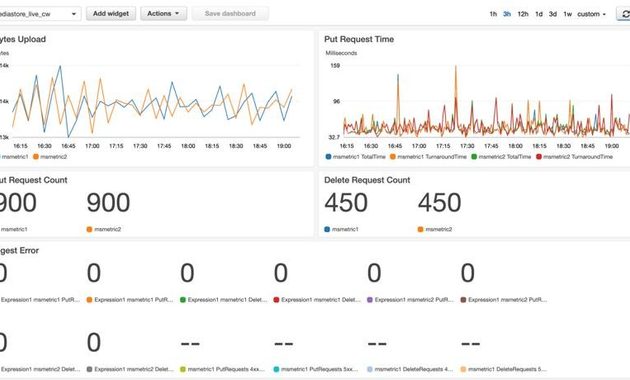
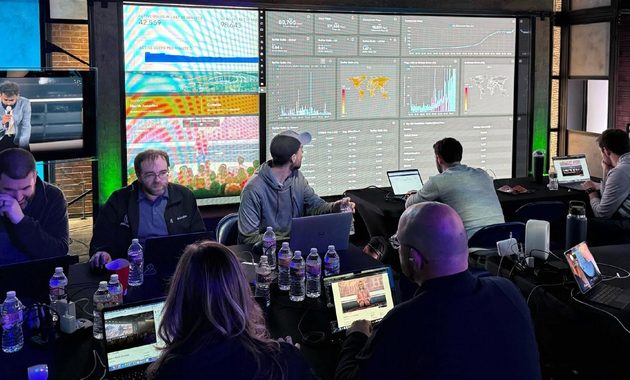
- Observability: Are bitrate, errors, latency, and dropped inputs visible?
- Failover: How quickly can the system recover?
- Pricing: Are bandwidth and transfer charges transparent?
This is also where platform consolidation becomes interesting. A service may appear independent while relying heavily on third-party cloud infrastructure underneath.
4. Cloud Egress Costs Should Be Modeled Before the Platform Scales
Cloud egress costs shouldn’t be treated as an accounting problem that appears after launch.
Build a traffic model first.
For example, 10,000 viewers consuming an average 4 Mbps stream for one hour represents roughly 18 TB of traffic before accounting for protocol overhead and other delivery variables. AWS uses a comparable 10,000-viewer scenario in its live-streaming cost model.
That means the best platform isn’t necessarily the one with the lowest server rental price. It’s the one whose complete delivery architecture remains financially sustainable as audience numbers climb.
For broadcasters planning simultaneous distribution, a useful next step is understanding how multi-platform workflows handle several destinations at once. A practical reference is this guide to going live on all platforms at once, especially when estimating how many outbound feeds your infrastructure can realistically sustain.
5. Backend Infrastructure Is the Real Platform Differentiator
At the surface, streaming platforms compete over features, creators, discovery, and audience size.
Underneath, they’re competing over milliseconds, bandwidth, encoding capacity, redundancy, and infrastructure economics.
That’s why trending streaming platforms should be evaluated beyond their user interface. A flashy dashboard means little if an ingest region collapses during a major event.
My recommendation is to prioritize platforms that offer:
- Regional ingest redundancy
- Clear codec support
- Transparent bandwidth pricing
- Strong CDN integration
- Practical monitoring tools
- Documented failover architecture
- Room for AV1 adoption
The strongest backend is usually the one viewers never notice.
When the architecture works, the stream simply plays.


Nadira Wicaksana is a former social media listening analyst who has monitored creator trends, viral broadcasts, platform updates, and audience conversations across Southeast Asia. She has worked with digital agencies and consumer brands to identify new livestream formats before they become widely adopted. Her articles examine what is gaining attention, why audiences respond to it, and whether a trend has lasting value or is simply passing noise.